
The bags are packed, someone needs a ride, dinner needs deciding, and your workday may still be running in your head. Strength training for parents has to work in that real life. It cannot depend on perfect sleep, a free two-hour evening, or the motivation to start over every Monday.
The good news is that useful strength work is not reserved for people with wide-open calendars. Two or three coached sessions each week can build the legs, back, shoulders, and trunk strength that makes daily life feel less physically demanding. The goal is not to train like you have no responsibilities. It is to become more capable for the responsibilities you do have.
Checkout our senior citizen training schedule here: /senior-strength
Why strength training for parents matters
Parenting is repetitive physical work. You carry a sleeping child, crouch beside a low drawer, load groceries, lift a stroller, sit through long drives, and get up from the floor more times than you can count. Those tasks may not feel like exercise, but they ask a lot of your hips, knees, shoulders, grip, and lower back.
Progressive strength training prepares you for those demands. Squats build the ability to stand, sit, and lift from low positions. Deadlifts teach you to hinge and pick things up with a stable back. Presses and rows develop shoulder strength for carrying and reaching. Carries challenge grip, posture, and trunk control in a way that translates well to real life.
There is also a less obvious benefit: confidence. Many parents spend years putting their own physical needs at the bottom of the list. Getting stronger creates evidence that your body can adapt, learn, and do hard things. That matters when you are returning to exercise after pregnancy, a long work stretch, an injury, or simply a few years away from regular training.
Strength training can support bone health, balance, and healthy aging too. That is not only a concern for later in life. The habits and muscle you build now are an investment in being able to stay active with your family for decades.
Start with the minimum that works
A full training plan is only useful when you can repeat it. For most busy parents, two full-body sessions per week is a strong starting point. A third session is helpful when it fits, but it is not the price of admission.
Each session should cover a squat or split-squat pattern, a hinge, an upper-body push, an upper-body pull, and some trunk or carry work. You do not need a new workout every visit. Repeating key movements for several weeks gives you time to learn technique and make steady progress.
A simple 45-minute session might include a goblet squat, Romanian deadlift, dumbbell bench press, cable row, and farmer carry. The exercises are not magical. What makes them effective is appropriate loading, good positions, and gradual progression.
For example, you might begin with two sets of eight repetitions at a weight that feels challenging but controlled. Over time, you could add a repetition, add a small amount of weight, or improve your range of motion and consistency. That is progressive strength, and it works far better than chasing exhaustion every session.
Choose repeatable training times
The best training slot is usually the one with the fewest negotiations. For one parent, that is before the household wakes up. For another, it is lunch, a weekend morning, or immediately after work before heading home. There is no universally ideal schedule.
Look at the week you actually live, then protect two windows. Put them on the shared family calendar if needed. Treat them like an appointment that supports the rest of the household, not a reward you earn after every task is complete.
Flexibility still matters. A sick child, late meeting, or school event will sometimes take over. Missing one session is normal. The useful response is not to cram three hard workouts into the next two days. It is to return to the next planned session and keep the habit moving.
A realistic strength training plan for parents
A two-day plan works best when both days train the whole body, with slightly different emphasis. That way, a missed session does not mean an entire body part or movement pattern disappears for the week.
Day one: squat, push, pull
Start with a squat variation that matches your current experience and mobility. A goblet squat to a box may be the right place to begin; a barbell back squat may suit someone with more training history. Follow it with a horizontal push such as a dumbbell bench press or elevated push-up, then a row. Finish with a loaded carry or a simple plank variation.
Keep two or three repetitions in reserve for most sets. In plain terms, finish feeling like you could have done a little more with good form. Parents do not need every session to leave them wiped out. They need training that lets them show up well the next day.
Day two: hinge, single-leg work, overhead strength
Use a hinge such as a kettlebell deadlift, trap-bar deadlift, or Romanian deadlift. Add a split squat, step-up, or reverse lunge for single-leg strength and balance. Pair that with an overhead press or landmine press, then use a pulldown or assisted pull-up for upper-body pulling.
If your shoulders, knees, or back are sensitive, the movement can be adjusted without abandoning the goal. A coach may shorten the range of motion, change the implement, lower the load, or select a different variation. Training around discomfort is not the same as ignoring pain. Sharp, worsening, or persistent pain deserves medical guidance.
Technique and recovery are part of the program
When time is limited, it is tempting to rush straight to heavy weights. But technical practice is not wasted time. Learning to brace before a deadlift, keep the ribs stacked during a press, or control a squat gives you safer and more productive repetitions.
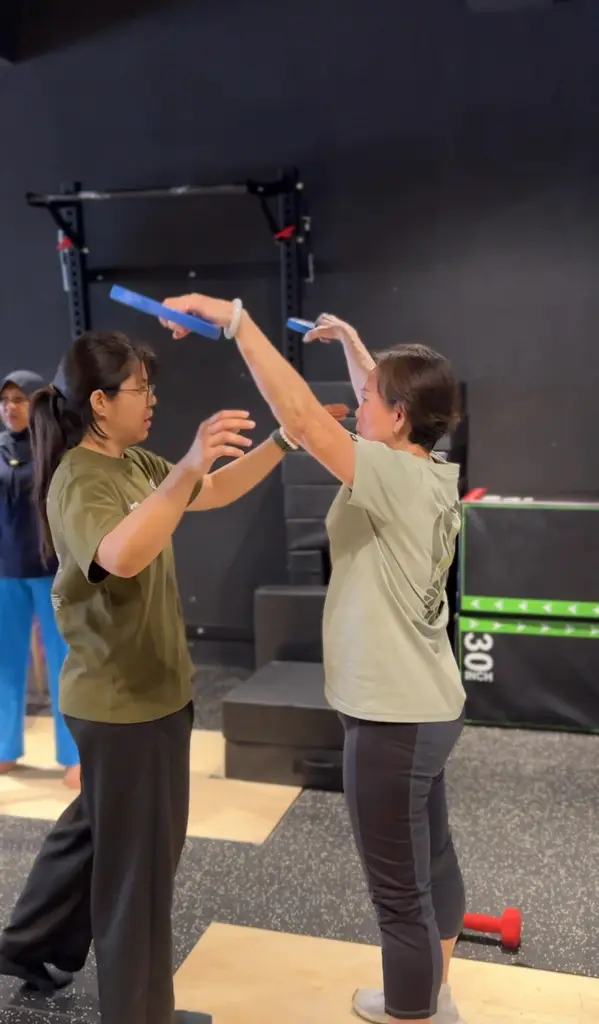
This is where small-group coaching can make a real difference. You get eyes on your movement, a plan scaled to your ability, and a clear next step rather than guessing what to do in a crowded room. At ANTS Training Club, parents can train alongside beginners, experienced lifters, and older adults while working at the level that fits them.
Recovery deserves the same practical approach. You may not control a child's night waking or a demanding work deadline, so do not build a plan that assumes perfect recovery. On low-sleep weeks, keep the session but reduce the weight, sets, or intensity. A lighter session maintains the routine and often helps you feel better than skipping movement altogether.
Food does not need to be complicated either. Regular meals with enough protein, carbohydrates for training energy, and produce where possible will do more than extreme rules. Keep water nearby. Plan easy options for the busiest days. Consistency beats a short burst of perfection.
Let training support family life
Strength training takes time, and that trade-off is real. Two weekly sessions may mean sharing pickup duties, preparing dinner earlier, or saying no to something else. But the return is not only a number on a barbell. It can be less hesitation when lifting, better energy on a long weekend, steadier movement on stairs, and a stronger sense that your own health belongs in the family plan too.
If your children see you train, they also see a useful example: exercise is not punishment for eating or a vanity project. It is practice for living capably. Start with two sessions, learn a few movements well, and give the process enough time to become part of your week.
See also: Strength, Conditioning & Bodybuilding