
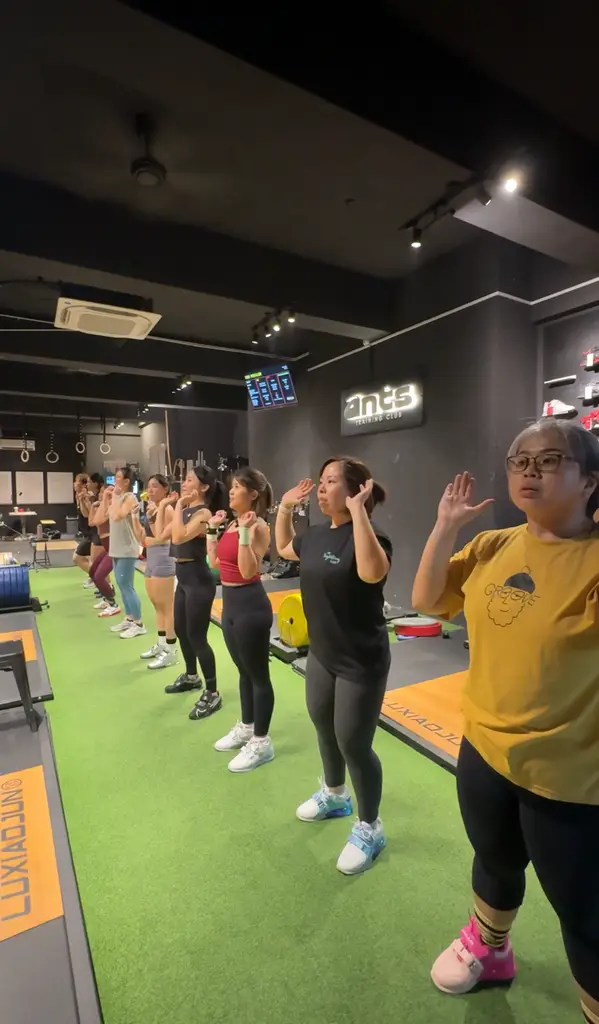
The best strength gym Kelana Jaya residents can choose is not necessarily the one with the most machines, the loudest playlists, or the longest row of treadmills. It is the place where you learn how to move well, train with a clear purpose, and keep showing up long enough for strength to change your everyday life.
That matters whether you are a student carrying a heavy backpack, a professional spending long hours at a desk, a parent who wants more energy, or someone who wants to keep getting up from the floor confidently at 70. Strength is not reserved for competitive athletes. It is a practical skill, and it can be built at every starting point.
What a strength gym should actually help you do
A good training space gives you more than access to barbells and dumbbells. It gives you a plan, coaching attention, and exercises that match your current ability. You should understand what you are training, why you are training it, and how the work will progress over time.
For some people, that may mean learning a solid squat, hinge, push, pull, carry, and brace. For others, it may mean building the leg strength and balance needed to move more comfortably on stairs. An experienced lifter may be refining the timing of a snatch or clean and jerk. The tools can look different, but the goal is similar: become more capable without treating every session like a test.
Progressive strength training works because it gives your body a reason to adapt. Over weeks and months, you may add load, complete more quality repetitions, improve range of motion, or move with better control. The right progression is rarely dramatic from one session to the next. It is steady, repeatable work that respects recovery.
That is also why random workouts can be frustrating. They may leave you tired, but tired is not the same as trained. A session should have enough challenge to move you forward while still leaving room for good technique and a life outside the gym.
Why coaching changes the experience
Technique is not about making every lift look identical. Bodies are different. Limb lengths, training history, mobility, previous injuries, and confidence all affect how a movement feels. Good coaching helps you find a safe, effective version of the movement rather than forcing you into a position that does not suit you.
In a small-group setting, a coach can spot details that are easy to miss when you train alone: knees collapsing during a squat, a rushed pull from the floor, shoulders losing position in a press, or fatigue changing your form near the end of a set. Sometimes the right adjustment is technical. Sometimes it is reducing the load, shortening the range of motion, or choosing a different exercise for the day.
This is especially useful for people returning to exercise after a long break. You do not need to arrive fit, flexible, or familiar with gym terminology. You need a starting point. A sensible coach will help you build one without making you feel like you are behind everyone else.
Coaching also creates accountability without pressure. On a demanding week, the win may be simply getting through the door and completing the session you planned. Consistency beats occasional heroic effort, particularly when your goal is to feel stronger for years rather than weeks.
Small groups leave room for individual needs
Group training is not automatically personalized. In a crowded class, it can be difficult for a coach to give useful feedback to everyone. Smaller groups make a meaningful difference because the same session can be scaled in real time.
One person may deadlift from the floor, another may pull from raised blocks, and another may use a lighter kettlebell hinge. All three can train the same pattern at an appropriate level. The room still feels social, but nobody has to pretend that their body, experience, or goals are the same as the person beside them.
That approach is valuable for joint discomfort too. Training around a cranky knee, stiff shoulder, or old back issue does not always mean stopping all strength work. It often means making informed changes while continuing to build capacity. Pain that is severe, sudden, or persistent deserves medical guidance, but thoughtful strength programming can support a gradual return to confident movement.
Strength gym Kelana Jaya options should fit your schedule
The most carefully designed program only works if you can attend it. For busy adults, a gym should offer clear ways to train around work, school, family, and commuting. That may include coached classes at practical times, personal training when you need focused attention, and open-gym access when you want to train your own program, on your own time.
Each format serves a different purpose. Classes provide structure, coaching, and community. Personal training is useful when you have a specific goal, are managing a more complex limitation, or want concentrated technical work. Open gym suits independent trainees who already have a program but want a well-equipped place to complete it.
There is no prize for choosing the most intense option. The best format is the one you can sustain. A parent with two reliable sessions each week may make more progress than someone who commits to five sessions and disappears after a month.
At ANTS Training Club, the aim is to make that consistency possible through coached strength and conditioning, Olympic weightlifting instruction, senior training, personal coaching, and open-gym access. The common thread is simple: meet people where they are, then help them move forward.
Strength at every age is a practical investment
For younger adults, strength can improve sporting performance, confidence, posture, and resilience under a busy schedule. For parents, it can make daily lifting, carrying, and chasing after children feel less demanding. For older adults, strength training supports balance, bone health, mobility, and physical independence.
The last point deserves more attention than it gets. Losing strength is not only about lifting less weight. It can affect how easily you stand from a chair, carry groceries, recover from a stumble, or travel without worrying about fatigue. Training legs, hips, upper body, grip, and trunk control is a direct investment in continuing to do the things you enjoy.
Senior strength training should be challenging, but it should not be careless. Good sessions include controlled resistance work, balance practice, manageable conditioning, and enough rest to maintain quality. A coach can progress exercises gradually, using supports or modifications where helpful, without making training feel fragile or overly cautious.
Training alongside people from different life stages can be encouraging too. A first-time lifter sees that strength is learnable. An experienced athlete is reminded that technical discipline matters. Older members show what long-term commitment looks like. Everyone has something to gain from a room where serious training and genuine welcome coexist.
How to choose your first session
Before joining any gym, pay attention to how the coaches communicate. Are they willing to ask about your goals, injuries, schedule, and previous training? Do they explain how a beginner starts? Can they tell you how they modify movements and measure progress?
Look at the atmosphere as well. A strength gym should make room for focus, but it does not need to feel intimidating. You should be able to ask a question, take the time needed to learn a lift, and work at a level that challenges you without embarrassment.
A trial session is a useful chance to notice the basics. Did you receive coaching? Were the exercises adapted appropriately? Did the session feel organized? Most importantly, can you imagine returning next week?
Your first session does not need to prove anything. Start with the weight, variation, and pace that let you learn well. Strength grows one well-coached repetition at a time, and the right local gym can make that process something you look forward to keeping.
See also: Strength, Conditioning & Bodybuilding