A heavy grocery bag, a low chair, a flight of stairs, a sudden step off a curb - everyday life asks for strength more often than most people realize. Senior strength training helps keep those movements comfortable, controlled, and confident. It is not about chasing a personal record or trying to train like someone half your age. It is about building the physical capacity to keep doing the things that make life feel like your own.
For adults over 55, strength work can support balance, bone health, mobility, and independence. Just as importantly, it gives you a practical way to respond to the changes that can come with aging rather than simply accepting them. A good program meets you at your current level, respects your history, and progresses at a pace your body can use.
Why Senior Strength Training Matters
Muscle strength naturally declines with age when it is not challenged. That can make simple activities feel more demanding: carrying laundry, getting up from the floor, walking longer distances, or keeping steady when you turn quickly. Strength training gives the body a reason to maintain and build the muscle needed for those tasks.
The benefits go beyond muscles. Loading the body appropriately can support bone health, while exercises that challenge the legs, trunk, and grip can improve the ability to recover from a trip or move with better control. Training also gives balance practice a real-world context. Standing on one leg is useful, but being able to stabilize yourself while carrying a bag or stepping over an obstacle is often more relevant.
There is a confidence piece, too. When people feel physically capable, they are more likely to stay active, travel, play with grandchildren, join friends for a walk, and keep up with the responsibilities they enjoy. Confidence does not come from being told you are strong. It comes from repeatedly proving to yourself that you can do difficult things safely.
What Good Senior Strength Training Looks Like
The best program is not the hardest one in the room. It is the one you can practice consistently, progress gradually, and recover from well. That means starting with movements that match your current ability, then increasing the challenge only when your technique and comfort say you are ready.
A well-coached session usually includes a warm-up that prepares the joints and raises body temperature, followed by a few foundational strength movements. You might practice a squat pattern by sitting down to and standing up from a box, a hinge pattern with a light kettlebell deadlift, an upper-body push against an elevated surface, and a pulling movement such as a cable or band row. Carries, supported balance drills, and controlled floor-to-standing practice can also be valuable.
The tools are secondary. Dumbbells, barbells, machines, kettlebells, resistance bands, and body weight can all have a place. A barbell is not automatically too advanced, and a band is not automatically easy. What matters is the exercise selection, the load, the range of motion, and the quality of coaching.
For some people, a chair-supported squat is the right starting point. For another, a squat with a barbell may be completely appropriate. The goal is not to keep training forever at the easiest variation. The goal is to earn progress without rushing it.
Start With Movement, Not Assumptions
Age alone does not tell a coach what you can do. Two people in their sixties may have very different training histories, mobility, health considerations, and goals. One may be returning after years away from exercise. Another may already hike, play tennis, or have experience lifting weights.
A thoughtful starting point looks at how you move, not just your date of birth. Can you comfortably stand from a chair? How is your balance when you walk and turn? Does your knee, hip, shoulder, or back have a history worth considering? What activities do you want to do more easily?
This is also where honest communication matters. Joint discomfort does not always mean you must avoid movement, but sharp pain, swelling, numbness, unusual shortness of breath, dizziness, or a sudden change in function deserve attention. A qualified coach can adjust training around many common limitations, while medical concerns should be discussed with the appropriate health professional.
Progress Should Feel Earned
Progressive strength training means adding challenge over time. That might mean lifting a little more weight, completing an extra repetition with good form, using less support for a balance drill, or moving through a fuller comfortable range of motion. Progress is not limited to the number printed on a dumbbell.
A useful first month may simply be about learning positions, building consistency, and understanding what a manageable effort feels like. That is real progress. Once those foundations are in place, the work can become more demanding in small, sensible steps.
Most people do well with two or three strength sessions each week, especially when sessions are built around full-body movement. Recovery matters as much as training. Walking, gentle mobility work, sleep, regular meals, and rest days all help the body adapt. If you feel tired after a session but normal again within a day or two, that is usually a better sign than being sore enough to avoid moving for the rest of the week.
The Movements That Carry Over to Daily Life
Senior strength training should prepare you for life outside the gym. That is why programs often return to a handful of fundamental patterns.
Squatting and step-up work build leg strength for chairs, stairs, and getting in and out of a car. Hinge exercises, including deadlift variations, teach the hips and legs to share the work when picking something up. Pressing and pulling movements support the shoulders and upper back for reaching, lifting, and carrying. Carries strengthen the hands, trunk, and posture while also asking the body to walk under load.
Core training is useful, but it does not need to mean endless sit-ups. Bracing during a deadlift, staying tall during a carry, or controlling your torso during a row are all ways to train the trunk for its real job: helping transfer force and maintain position while the rest of you moves.
Balance can be woven throughout the session rather than treated as an afterthought. A split-stance exercise, a controlled step-down, a single-leg hold near support, or simply learning to move slowly and deliberately can all build steadiness. The right challenge is one that asks you to focus without putting you in a situation where a fall is likely.
Why Coaching and Community Make a Difference
Training independently can work well for experienced lifters, but many older adults benefit from eyes on their movement. Good coaching is not about correcting every tiny detail. It is about helping you find a safe, repeatable position, choosing the right version of an exercise, and knowing when to encourage more effort or pull back.
Small-group coaching offers another advantage: you are not training alone, yet the session can still be scaled to you. One person may use a higher box for squats while another adds load. Both are working toward stronger legs. That is what an inclusive training floor should look like.
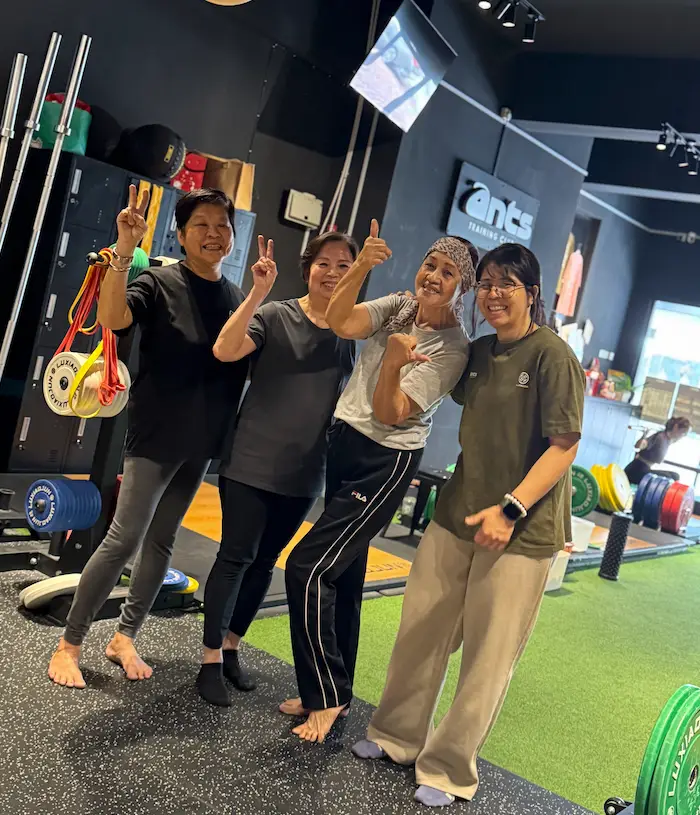
At ANTS Training Club, older adults can train alongside people at different stages of life without being treated as fragile or left to figure things out alone. The standard is simple: serious coaching, sensible progress, and a welcoming room where every person has a place.
A Better Way to Measure Success
The scale and the mirror may not tell the full story. Pay attention to the changes that matter in your own routine. Perhaps you can carry groceries without switching hands, climb stairs with less hesitation, stand up from the floor more easily, or spend a day out without feeling drained. Those wins are worth noticing.
Strength is built one well-practiced session at a time. Start where you are, use support when you need it, and let consistency do its quiet work. The aim is not to turn back the clock. It is to keep moving forward with more capability, more confidence, and more choice in how you live.
See also: Senior Strength & Conditioning